
Berberine for Lipedema: Does It Actually Help?
Berberine has exploded in popularity over the past few years.

You've probably seen it promoted for weight loss, blood sugar, insulin resistance, inflammation, and even described online as “nature's Ozempic.”
So naturally, women have started asking about berberine for lipedema.
Could improving metabolism help lipedema?
Could berberine reduce inflammation?
Could it help you lose some of the excess fat surrounding lipedema tissue?
These are reasonable questions.
But there's an important distinction to understand immediately:
Berberine has not been proven to treat lipedema itself.
Its potential value is much more indirect.
And once you understand what berberine actually does, it becomes much easier to decide whether it makes sense for someone with lipedema.
1. What Exactly Is Berberine?
Berberine is a naturally occurring plant compound known as an alkaloid.
It can be found in several plants, including barberry, goldenseal, Oregon grape, and Chinese goldthread.

It has a long history of use in traditional medicine, but modern researchers have become particularly interested in its effects on metabolic health.
Human studies have investigated berberine for:
Blood glucose
Insulin resistance
Cholesterol
Triglycerides
Body weight
Waist circumference
Inflammatory markers
And unlike many supplements, we actually have a substantial number of randomized human trials.
That's important.
But those trials generally aren't about lipedema.
2. Why Are Women With Lipedema Interested in Berberine?
The connection isn't as direct as you might think.
Lipedema is a disorder involving abnormal adipose and loose connective tissue.
It is not simply caused by insulin resistance, and developing lipedema does not automatically mean someone has poor metabolic health.
Women with lipedema can be extremely lean.
They can have normal blood sugar.
They can exercise regularly.
And they can still have lipedema.
However, lipedema can also coexist with ordinary obesity and metabolic dysfunction.
That's where berberine becomes more interesting.
If someone has lipedema plus excess non-lipedema body fat, insulin resistance, impaired glucose control, or other metabolic problems, improving those problems could potentially improve overall health and body composition.

That's very different from claiming berberine removes lipedema tissue.
3. What Does Berberine Do to Blood Sugar and Insulin?
This is where the human evidence is strongest.
A systematic review and meta-analysis of 20 randomized trials involving 1,761 participants found that berberine supplementation improved several measures of glucose metabolism.
Researchers reported reductions in:
Fasting glucose
HbA1c
Fasting insulin
HOMA-IR
Post-meal glucose
Interestingly, some analyses suggested potentially larger improvements in fasting glucose and insulin resistance among women, although researchers cautioned that those subgroup findings still need confirmation.
Another large umbrella review of randomized-trial meta-analyses similarly found improvements in glucose control, insulin resistance, and several inflammatory markers.
That's legitimate clinical evidence.
But here's the key:
Improving insulin resistance is not the same as treating lipedema.
4. Why Isn't Berberine in Lipera?
Lipera was physician-developed specifically around areas considered particularly relevant to women with lipedema.
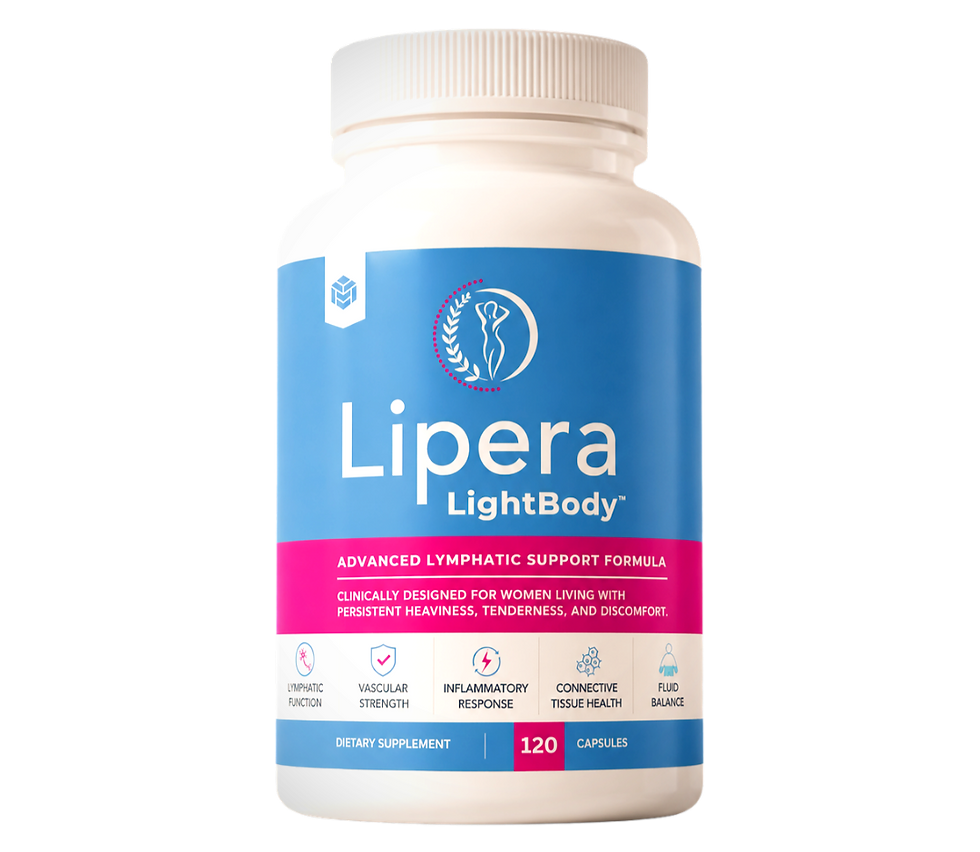
Instead of focusing primarily on blood glucose and insulin resistance, the formula includes ingredients selected around areas such as circulation, fluid balance, lymphatic function, inflammatory support, and tissue health.
That includes ingredients such as:
Diosmin.
Hesperidin.
Butcher's broom.
Rutin.
Quercetin.
Bromelain.
Curcumin.
Resveratrol.
CoQ10.
And additional bioflavanoids.

Berberine isn't necessarily a bad supplement because it isn't included.
It simply serves a different purpose.
Someone with metabolic dysfunction may have a legitimate reason to discuss berberine with their healthcare provider.
But that doesn't automatically make it an essential lipedema supplement.
5. Does Insulin Resistance Cause Lipedema?
There isn't good evidence showing that insulin resistance is the fundamental cause of lipedema.
That distinction matters enormously.
Otherwise, we could simply treat insulin resistance and expect lipedema to disappear.
That doesn't happen.
Lipedema appears to involve a much more complicated combination of genetics, hormones, adipose biology, connective tissue, vascular changes, inflammation, and fluid dynamics.
That's also why some very thin women develop obvious lipedema, as seen in the photo below.

So if your blood sugar and insulin sensitivity are already healthy, berberine's metabolic effects may be considerably less relevant to your lipedema.
But if metabolic dysfunction exists alongside the condition, that's a different conversation.
6. Can Berberine Help With Weight Loss?
This is probably why most people are searching for it.
Berberine does appear to have some effect on body composition—but don't expect GLP-1-level weight loss.
A recent systematic review and meta-analysis of 23 randomized trials found that berberine produced modest average reductions in body weight, BMI, and waist circumference.
Average weight reduction was less than one kilogram in that analysis.
Earlier meta-analyses have produced somewhat different results, which is one reason the National Center for Complementary and Integrative Health cautions that the evidence isn't definitive.
So yes:
Berberine may modestly support weight management in certain populations.
But no:
It isn't a powerful fat-loss drug.
And even more importantly for women with lipedema, losing ordinary body fat and removing lipedema tissue are two completely different things.
7. Can Berberine Burn Lipedema Fat?
There is currently no convincing evidence that it can.
This distinction is critical.
Lipedema tissue is notoriously resistant to ordinary weight-loss strategies.
That doesn't mean women with lipedema can't lose fat.
They absolutely can.
If someone carries excess non-lipedema body fat, a calorie deficit can reduce that fat.
Their waist may shrink.
Their upper body may become leaner.
Their legs may become smaller to some degree.
Their metabolic health can improve.
But the characteristic lipedema tissue can remain disproportionately resistant.
Taking berberine doesn't magically change that biology.
So don't think:
“Berberine burns lipedema fat.”
Think:
“Berberine may support certain aspects of metabolic health that can matter alongside lipedema.”
That's much more accurate.

8. What About Inflammation?
This is another genuinely interesting area.
A meta-analysis of randomized clinical trials involving approximately 1,600 adults found that berberine or barberry interventions reduced several inflammatory markers, including:
C-reactive protein (CRP).
IL-6.
TNF-alpha.
Another umbrella analysis also reported reductions in several inflammatory biomarkers.
Since inflammatory abnormalities have been identified in lipedema tissue, that naturally raises interest.
But once again, we need to stop one step short of making an unsupported claim.
We don't currently know whether taking berberine meaningfully reduces inflammation inside lipedema tissue.
That specific clinical question hasn't been answered.
9. Will Berberine Reduce Lipedema Swelling?
Probably not in the way many people imagine.
Berberine isn't primarily a lymphatic or venoactive supplement.
Compare that with ingredients such as diosmin or butcher's broom, which have much more direct research involving venous function and edema.
Berberine's strongest evidence is metabolic.
That doesn't mean metabolic improvements could never influence how someone feels.
But if your primary problem is:
Heavy legs.
Fluid accumulation.
Swelling.
Venous symptoms.
Then berberine wouldn't necessarily be the first ingredient we'd look toward.
This is also one reason berberine is not included in Lipera.
10. Metabolic Health Still Matters With Lipedema
Here's where we don't want the message to swing too far in the opposite direction.
Saying lipedema isn't caused by obesity does not mean body composition and metabolic health don't matter.
They absolutely do.
Someone can have both lipedema and obesity.
Additional non-lipedema fat can increase mechanical load on the legs and make movement more difficult.
Poor metabolic health carries its own long-term risks regardless of whether someone has lipedema.
So improving metabolic health is still extremely valuable.
Nutrition matters.
Exercise matters.
Muscle matters.
Sleep matters.
Maintaining an appropriate body weight matters.
Our guide to exercise and lipedema explains why improving the healthy tissue surrounding lipedema can make such an enormous difference even if the lipedema tissue itself doesn't completely disappear.
Berberine could potentially complement that strategy for the right person.
It shouldn't replace it.
11. Is Berberine Safe?
Berberine is biologically active enough that you shouldn't treat it like a harmless vitamin.
Commonly reported side effects are primarily gastrointestinal and can include:
Nausea
Abdominal discomfort
Bloating
Constipation
Diarrhea
More importantly, berberine can interact with medications.
That becomes particularly important if you're already taking medications affecting blood glucose or other prescription drugs.
Berberine should also be avoided during pregnancy and breastfeeding because of potential risks to the fetus or infant.
If you're taking prescription medication or managing diabetes or another metabolic condition, discuss berberine with your healthcare provider rather than simply adding it yourself.
So, Does Berberine Help Lipedema?
Berberine is a genuinely interesting supplement.
There is human clinical evidence suggesting benefits involving glucose control, insulin resistance, inflammatory markers, cholesterol, and potentially modest improvements in body composition.
But those aren't the same thing as treating lipedema.
There is currently no good evidence demonstrating that berberine removes lipedema tissue, substantially reduces lipedema swelling, or reverses the disease.
Its potential value is more indirect.
If someone with lipedema also struggles with metabolic dysfunction, insulin resistance, or excess non-lipedema body fat, improving those areas could be extremely valuable for their overall health.
But if you're looking specifically for support involving circulation, fluid balance, and the heavy-leg symptoms associated with lipedema, other ingredients have a more direct rationale.
That's why berberine isn't included in Lipera.
Berberine may be a useful metabolic supplement for the right person.
It just shouldn't be confused with a proven treatment for lipedema.