
Complete Decongestive Therapy for Lipedema: Does It Actually Work?
Complete decongestive therapy sounds intense.
The name alone can make it seem like a treatment designed to somehow “drain” lipedema out of the body.

That's not quite what it does.
Complete decongestive therapy for lipedema is a combination of conservative treatments that can help manage symptoms such as swelling, pain, heaviness, and impaired mobility.
Research suggests it can provide meaningful benefits for some women—particularly when edema or lymphatic dysfunction is also present.
But there is an important limitation.
CDT does not remove lipedema fat.
So the real question isn't simply whether complete decongestive therapy works. It's what does it actually work for?
1. What Is Complete Decongestive Therapy?
Complete decongestive therapy, usually shortened to CDT, isn't one treatment.
It's a treatment program.
The major components generally include:
Compression therapy
Manual lymphatic drainage
Exercise
Skin care
Education and self-management
A lipedema focused supplement like Lipera
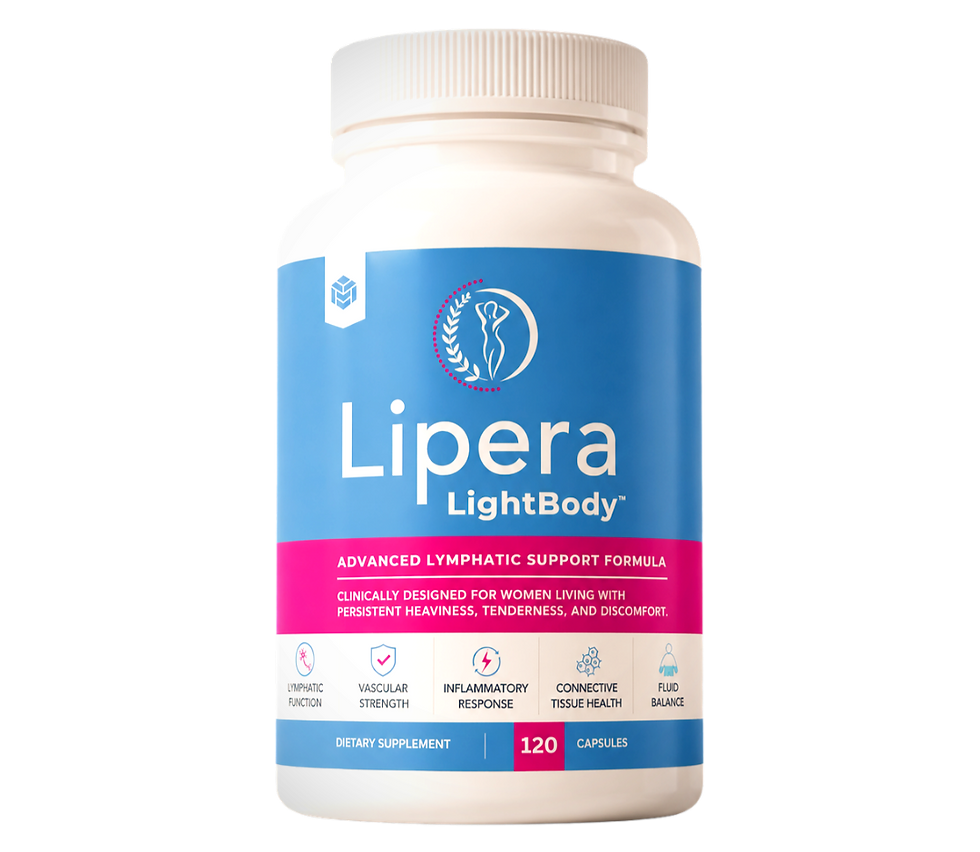
The goal is to combine several interventions that address different parts of the problem rather than expecting one therapy to do everything.
The U.S. lipedema standard of care recommends an individualized conservative approach that can include manual therapy, compression, exercise, nutritional guidance, and—in appropriate patients—pneumatic compression.

This is important because you'll sometimes see CDT described online as though it's basically an elaborate lymphatic massage.
It isn't.
Manual lymphatic drainage is only one component.
Compression helps support the tissue and manage edema.
Exercise activates muscles and improves physical function.
Skin care helps protect tissue, particularly when substantial folds or swelling are present.
Education teaches women how to manage symptoms outside the therapist's office.
CDT is therefore better understood as a system rather than a single treatment.
2. Does Complete Decongestive Therapy Actually Work for Lipedema?
Yes—but with realistic expectations.
One of the strongest pieces of evidence comes from a randomized controlled trial involving women with severe lipedema.
Researchers divided participants into three groups: exercise plus CDT, exercise plus intermittent pneumatic compression, and exercise alone. Everyone completed 30 exercise sessions over six weeks.
The women receiving CDT plus exercise experienced significantly greater improvements in limb volume, pain, and physical functioning compared with the other treatment approaches.
That's meaningful.
The randomized lipedema CDT trial gives us actual clinical evidence that adding CDT to exercise can improve outcomes in women with severe disease.
But notice what researchers measured.
They weren't reporting that lipedema disappeared.
They were measuring things like limb volume, pain and physical function.
That's the difference between managing lipedema and curing it.
3. What Does Manual Lymphatic Drainage Actually Add?
Manual lymphatic drainage, or MLD, is probably the most famous part of CDT.
It involves gentle, specialized movements intended to encourage lymphatic flow and help manage fluid accumulation.

Many women describe their legs feeling lighter or less tight afterward.
However, modern lipedema guidance has become more nuanced about MLD.
The Lipedema World Alliance consensus identifies manual lymphatic drainage as one component of CDT but notes that there isn't evidence supporting MLD by itself as a lipedema treatment.
Research has generally evaluated it in combination with compression, exercise, or other interventions.
That's an important distinction.
A lymphatic massage may feel wonderful.
But repeatedly receiving MLD while ignoring movement, strength, compression when indicated, and other aspects of your health isn't the same thing as following a comprehensive treatment program.
Think of MLD as one tool in the toolbox.
Not the entire toolbox.
4. Why Compression May Be One of the Most Important Parts
After fluid is mobilized, you don't necessarily want it simply accumulating again.
That's where compression becomes useful.
Compression garments or bandaging provide external support to the affected tissue and can help control edema.
For women with painful, heavy legs, that support can also make standing and moving more comfortable.
And movement matters.
If compression allows you to walk farther, exercise more comfortably, or spend more time on your feet, its value extends beyond simply controlling fluid.
Compression should still be individualized.
Some women tolerate relatively light compression well. Others need stronger containment.
Advanced disease, irregular limb shape, secondary lymphedema, pain, and physical ability can all change which garment is appropriate.
More pressure isn't automatically better.
The goal is sustainable support—not squeezing your legs as hard as possible.
5. Exercise Is What Makes CDT More Than Passive Treatment

This part doesn't get enough attention.
If you think of CDT as something a therapist does to you, you're missing one of its most valuable components.
You need to move.
Muscle contractions contribute to fluid movement while also building strength and preserving mobility.
And unlike massage, exercise produces adaptations.
Your muscles become stronger.
Your cardiovascular fitness can improve. Your balance can improve. Everyday movements can become easier.
This is particularly important in advanced lipedema because pain, heaviness, and large tissue lobules can gradually make movement more difficult.
Less movement can lead to poorer conditioning, which makes movement even harder.
That's a cycle worth interrupting.
Walking, swimming, cycling, resistance training, aquatic exercise, and other tolerable forms of activity can all have a place depending on your physical abilities.
CDT should ideally help you move more comfortably, not become a replacement for movement.
6. Can Complete Decongestive Therapy Make Your Legs Smaller?
Potentially.

But you need to understand why.
CDT can reduce excess fluid and edema.
If fluid is contributing to your limb volume, successful treatment can therefore reduce measurements.
An earlier randomized pilot study evaluated complete decongestive physiotherapy alone versus decongestive therapy combined with pneumatic compression.
Both groups experienced significant reductions in lower-extremity volume after treatment.
You can read the decongestive therapy pilot study for the results.
Again, though:
Reduced leg volume does not necessarily mean reduced lipedema fat.
This distinction is incredibly important when looking at before-and-after photographs.
A woman's legs may genuinely become smaller after treatment because swelling has decreased.
That's a successful outcome.
But it shouldn't be presented as proof that CDT has removed diseased adipose tissue.
7. What About Pain and Bruising?
This is another area where CDT becomes interesting.
Pain is one of the most disruptive symptoms for many women with lipedema, and research suggests multimodal physical therapy can help.
A small study involving women with early-stage lipedema used manual therapy, individualized exercise, education, and compression recommendations over six weeks.
Participants experienced substantial improvements in pain and function.
The physical therapy lipedema study also found changes in tissue sodium measured using MRI, although the study was very small and larger trials are needed.
There is even research suggesting decongestive therapy may affect bruising.
A study involving 38 women with lipedema found that complete decongestive physiotherapy reduced measured capillary fragility compared with a control group.
So CDT's potential benefits aren't limited to simply making swollen legs temporarily smaller.
For some women, improving comfort may be the biggest reason to use it.
8. Who Is Most Likely to Benefit From CDT?
This is where individualized treatment becomes essential.
Not every woman with lipedema needs an intensive CDT program.
Someone with early-stage disease, minimal edema, good mobility, and manageable symptoms may have very different needs from someone with advanced lipedema and secondary lymphatic dysfunction.
A recent clinical review notes that CDT appears to offer relatively limited benefit in pure lipedema without significant fluid excess or lymphatic dysfunction, while potentially becoming more useful when lymphedema is also present.
That makes biological sense.
If there isn't much excess fluid to remove, a treatment centered partly around decongestion has less fluid to decongest.
But if your legs become significantly swollen, heavy, painful, or difficult to move—or you've developed lipolymphedema—the potential value changes considerably.
This is why treatment shouldn't be determined solely by your lipedema stage.
Your actual symptoms matter more.
9. Is CDT Something You Have to Do Forever?
Not necessarily in its most intensive form.
CDT is often thought of in phases.
An intensive period may involve frequent professional treatment, compression or bandaging, exercise, and other interventions designed to get symptoms under better control.
After that comes maintenance.
That's where self-management becomes extremely important.
Instead of relying indefinitely on frequent appointments, you may learn strategies that can be incorporated into everyday life: wearing appropriate compression, exercising, caring for your skin, performing self-management techniques you've been taught, and recognizing when symptoms are changing.
This is actually one of the most important goals of treatment.
You don't want your entire life revolving around managing lipedema.
You want to develop a routine that keeps symptoms as controlled as possible while requiring the least disruption to your life.
10. Think Beyond Therapy: Build a Body That Manages Lipedema Better
Complete decongestive therapy can be extremely useful for controlling symptoms, particularly when swelling, pain, or lymphatic dysfunction are significant.
But the long-term goal shouldn't be spending more and more time receiving therapy just to feel normal.
The better strategy is to work on the things you can influence every day.
For many women, that means focusing heavily on nutrition, building and preserving muscle, regular movement, and a comprehensive support routine.
Lipedema primarily affects adipose and connective tissue rather than skeletal muscle, so even when affected fat is stubborn, the muscles underneath and around that tissue can still become stronger.
That matters enormously.
Progressive resistance training can improve strength and physical function.
If excess non-lipedema fat is present, appropriate nutrition and sustainable weight management can improve overall body composition and reduce the total load carried by the hips, knees, ankles, and muscles.
Regular movement also keeps the muscular and cardiovascular systems working rather than allowing pain and heaviness to gradually make you more sedentary.
Some women also choose targeted nutritional supplementation as part of that broader strategy.
Lipera's lipedema support formula was physician-developed with ingredients selected to support areas relevant to women with lipedema, including circulation, lymphatic function, fluid balance, and tissue health.
Put those pieces together—appropriate nutrition, muscle building, consistent movement, symptom management, and supportive supplementation—and you have a much more comprehensive long-term strategy than relying on any one passive treatment.
Can that literally change someone from Stage 3 to Stage 2?
Not necessarily.
Lipedema staging reflects structural changes in the affected tissue, including fibrosis, nodules, and lobules, and there isn't good evidence showing that diet, exercise, or supplements reliably reverse those changes.
But the number attached to your stage isn't the only thing that matters.
A woman can become leaner, stronger, more mobile, less burdened by excess weight, and better able to manage swelling and discomfort even if some lipedema tissue remains.
Her legs may function dramatically better and the condition may have substantially less control over her everyday life.
That's the outcome worth chasing.
Use CDT when you need it.
Use compression when it helps.
But simultaneously work toward a stronger, healthier body that is better equipped to manage the condition every day.
The ultimate goal isn't simply to temporarily decongest your legs.
It's to make lipedema less disruptive to your life in the first place.
11. So, Is Complete Decongestive Therapy for Lipedema Worth It?
For the right woman, absolutely.
We have randomized clinical evidence showing that complete decongestive therapy for lipedema combined with exercise can reduce limb volume and pain while improving physical function in women with severe disease.
We also have evidence suggesting multimodal physical therapy can improve pain and function in earlier disease.
What we don't have is evidence that CDT removes lipedema fat or cures the underlying disorder.
And that's okay.
A treatment doesn't need to cure lipedema to be valuable.
If your legs hurt less, that's valuable.
If you can walk farther, that's valuable.
If swelling decreases, that's valuable.
If compression makes exercising easier, that's valuable.
If therapy gives you enough symptom relief to become more active and regain some control over your everyday life, that's extremely valuable.
Just remember what you're treating.
CDT is primarily a symptom-management and functional strategy, not a method of physically draining lipedema out of your body.
The best outcome isn't necessarily having the smallest possible legs after a therapy session.
It's having legs that hurt less, move better, interfere less with your life—and allow you to spend more time living it.