
Guaifenesin for Lipedema: What Every Woman Should Know Beforehand
Guaifenesin is widely known as an expectorant used to thin mucus and support respiratory clearance.
Over time, it has also been discussed in chronic pain and fibrotic conditions, leading some women with lipedema to wonder whether it could help with swelling, nodules, or tissue tightness.

Because lipedema involves abnormal connective tissue, fluid congestion, and inflammation, the idea that a compound affecting tissue viscosity might help is understandable.
But understanding what guaifenesin does—and what it does not do—is essential before using it as part of a lipedema strategy.
Guaifenesin and Lipedema: Why They’re Being Linked
Interest in guaifenesin and lipedema largely comes from anecdotal reports and comparisons to fibromyalgia protocols.
Guaifenesin has been suggested to influence phosphate handling and tissue fluid dynamics, which has led to speculation that it might soften tissue or improve lymphatic movement.
Clinical research into guaifenesin has focused primarily on its mucolytic properties and symptom relief rather than adipose or lymphatic disease modification.
Trials examining its broader systemic effects, such as this clinical investigation, highlight how limited the evidence is outside respiratory contexts.
This gap between speculation and evidence is important to acknowledge.
How Guaifenesin Works in the Body
Guaifenesin functions by reducing mucus viscosity, making secretions easier to expel.
This mechanism is effective in the respiratory tract, where mucus accumulation is the primary problem.
Lipedema tissue, however, is not congested with mucus.
It is characterized by fibrotic adipose tissue, inflammatory signaling, and lymphatic impairment.

While both involve “thickened” environments, the biological substrates are fundamentally different.
Research examining chronic tissue conditions emphasizes that mechanisms effective in one system rarely translate directly to another, as discussed in this population health review analyzing systemic versus localized tissue responses.
Does Guaifenesin Address Lipedema Biology? No
This is where expectations must be realistic.
Guaifenesin does not reduce lipedema fat, correct hormonal sensitivity, or repair lymphatic vessels. It does not directly lower inflammatory cytokines or alter adipose tissue signaling.
Any perceived benefit is likely due to transient changes in tissue hydration or nerve sensation rather than structural change.
This distinction explains why some women feel short-term softness without lasting improvement.
When evaluating guaifenesin to be taken for lipedema, it is critical to separate symptom perception from disease modification.
Why Lipera Is a Better Foundation
Instead of relying on compounds not designed for lipedema, Lipera is formulated specifically for the disease.
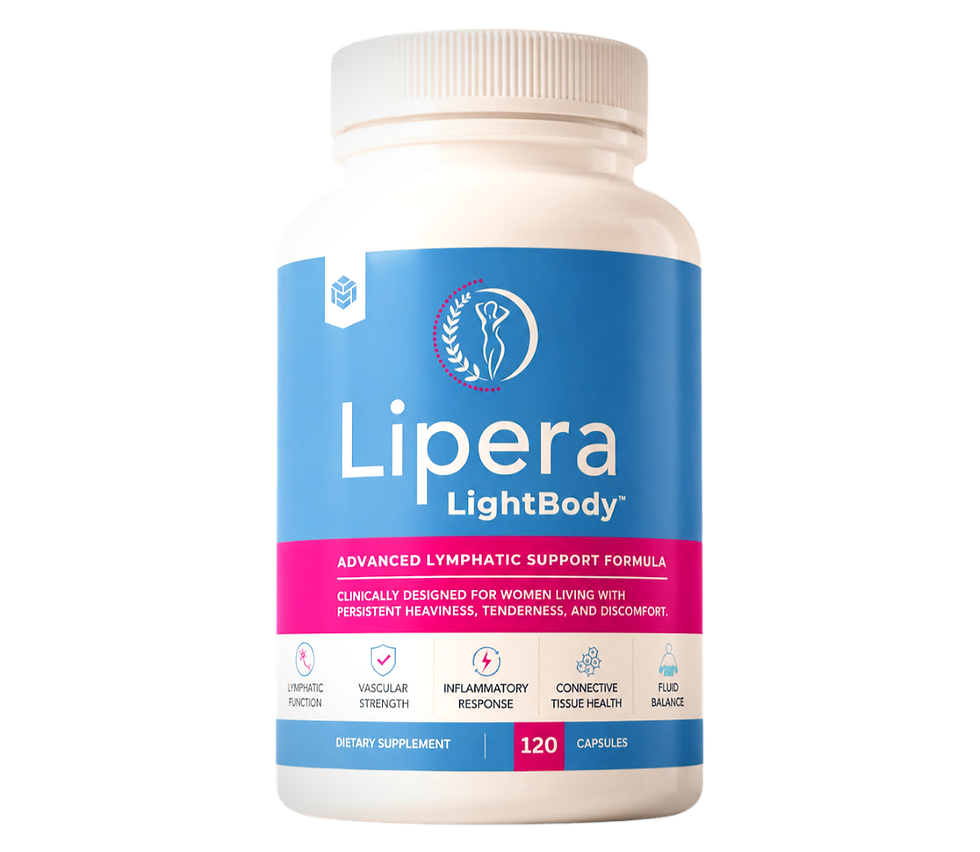
Its ingredients were selected to support lymphatic flow, microcirculation, and inflammatory balance—the systems most disrupted in lipedema.
This targeted approach is why Lipera functions as a foundation rather than an experiment. You can learn more about this system-level strategy at Lipera Health.
How Much Guaifenesin for Lipedema
This question has no evidence-based answer.
There is no standardized dosing protocol for lipedema, and no clinical trials defining safe or effective doses for this condition.
In other contexts, dosing varies widely depending on indication, duration, and formulation.
Without lipedema-specific research, any dosing approach is speculative and should be approached cautiously.
Clinical discussions around off-label use consistently emphasize the risks of extrapolating dosage from unrelated conditions, as noted in this clinical review examining medication repurposing limitations.
What Some Women Report Wile Using Guaifenesin
Some women report that guaifenesin temporarily reduces tissue firmness or discomfort.
Others notice no change at all.
A smaller group experiences increased fatigue or digestive upset.
This variability reinforces that guaifenesin is not acting on a core disease mechanism.
When responses are inconsistent, it usually means the intervention is not targeting the driver of the condition.
Why Guaifenesin Is Not a Core Strategy
Lipedema progression is driven by inflammation, insulin sensitivity, hormonal signaling, and lymphatic dysfunction.
Addressing these factors requires sustained, system-level support—not episodic symptom relief.
Relying on guaifenesin as a primary approach can delay implementation of strategies that actually slow progression.
This is why many women eventually move away from experimental protocols and toward evidence-based foundations.
What Matters More Than Guaifenesin
Dietary control, lymphatic support, and targeted supplementation consistently outperform speculative single-ingredient approaches.
Reducing sugar intake, stabilizing insulin, and lowering inflammatory load have measurable effects on daily swelling and pain.
Sugar is arguably the main aggravator of lipedema, not fat like most women think.
In other words,

These principles are outlined clearly in this dietary guide, which explains why metabolic control is central to lipedema management.
Ingredient Transparency Matters
When managing a chronic condition, knowing exactly what you are taking—and why—matters.
Lipera provides full ingredient transparency and rationale, which is especially important for individuals navigating trial-and-error fatigue. A complete breakdown is available at Lipera Ingredients.
This clarity stands in contrast to off-label protocols with unclear mechanisms.
Can Lipedema Be Reversed Without Experiments
Many women search for “one thing” that will fix lipedema. In reality, improvement comes from stacking proven strategies. Research-supported approaches to symptom reversal and stabilization are discussed in this clinical overview.
This reinforces why focusing on disease-specific solutions yields better outcomes than chasing unproven ideas.
Final Thoughts on Guaifenesin
Guaifenesin is not harmful when used appropriately, but it is not a treatment for lipedema.
It does not address the biological drivers of the disease, and any benefit is likely temporary and inconsistent.
For women considering guaifenesin for lipedema, the most important question is whether it supports long-term control or simply offers another short-lived experiment.
In most cases, investing energy into proven, lipedema-specific strategies leads to far more meaningful progress.