
How to Break Down Lipedema Fat: What Actually Works (And What Doesn't)
If you're reading this, there's a good chance you've already tried everything.

You've dieted.
You've exercised.
You've cut calories.
You've walked thousands of miles.
You've watched other people lose weight doing the exact same things while your legs, hips, buttocks, or arms seemed to refuse to cooperate.
That experience is incredibly common among women with lipedema.
One of the most frustrating parts of the condition is that lipedema fat does not behave like ordinary fat tissue.
It often responds differently to diet, exercise, hormones, inflammation, and fluid changes.
This leaves many women asking the same question:
How to breakdown lipedema fat?
The honest answer is that there is no single solution.
The women who typically see the best results are not relying on one supplement, one diet, one exercise program, or one surgery.
They are attacking the condition from multiple angles simultaneously.
Let's discuss what actually works—and what usually doesn't.
Why Lipedema Fat Is Different
Before talking about solutions, it's important to understand the problem.
Lipedema is not simply excess weight.
Research has shown that lipedema involves abnormal fat accumulation, inflammation, tissue changes, vascular dysfunction, and fluid-related issues that make the condition much more complex than traditional obesity.

According to this scientific review of lipedema biology, lipedema tissue demonstrates unique characteristics that may contribute to pain, swelling, tenderness, and resistance to traditional weight-loss approaches.
This is why many women become discouraged.
They are often using strategies designed for ordinary fat when they are dealing with something fundamentally different.
What Doesn't Work
Let's start with the mistakes.
Many women spend years trying:
Crash diets
Extreme calorie restriction
Excessive cardio
Detox cleanses
Fat-burning supplements
Starvation-style eating plans

These approaches may produce temporary weight loss, but they rarely address the underlying issues that make lipedema so challenging.
In many cases, they increase stress hormones, worsen inflammation, damage muscle mass, and leave women feeling exhausted.
The goal is not simply losing weight.
The goal is improving the environment surrounding the lipedema tissue itself.
What Actually Works: A Multi-Layered Approach
The women who tend to see the best outcomes usually combine several different strategies together.
Think of it as building a system rather than searching for a miracle.
Strategy 1: Follow An Anti-Inflammatory Diet
If there is one place every woman should start, it is nutrition.

Inflammation appears to play an important role in lipedema progression and symptom severity.
Reducing inflammatory burden may help support:
Swelling management
Fluid balance
Energy levels
Recovery
Overall wellbeing
This is why an anti-inflammatory eating approach is often considered the foundation of any successful lipedema plan.
Many women find improvements when they focus on:
Lean proteins
Vegetables
Healthy fats
Whole foods
Adequate hydration
While reducing:
Highly processed foods
Excess sugar
Refined carbohydrates
Highly inflammatory foods
You can learn more through this anti-inflammatory diet guide, which outlines practical ways to support the body through nutrition.
The reality is that even the best supplements and treatments tend to work better when inflammation is being managed appropriately.
Strategy 2: Consider GLP-1 Medications

This is one of the most exciting developments in lipedema management.
GLP-1 medications such as semaglutide and tirzepatide have helped many women achieve meaningful reductions in body weight.
While they do not cure lipedema, they may help reduce surrounding fat burden, improve mobility, lower inflammatory stress, and improve quality of life.
Importantly, Dr. Boris Volshteyn, a board-certified lipedema surgeon, has discussed how GLP-1 therapy may help reduce tissue volume before surgery, potentially making surgical outcomes easier to achieve.
For women wondering how to breakdown lipedema fat, GLP-1 therapy is one of the few interventions currently producing significant body-composition changes in large numbers of patients.
However, these medications work best when combined with proper nutrition, strength training, and long-term lifestyle changes.
They should be viewed as tools—not magic solutions.
Strategy 3: Support Symptoms Daily With Lipera
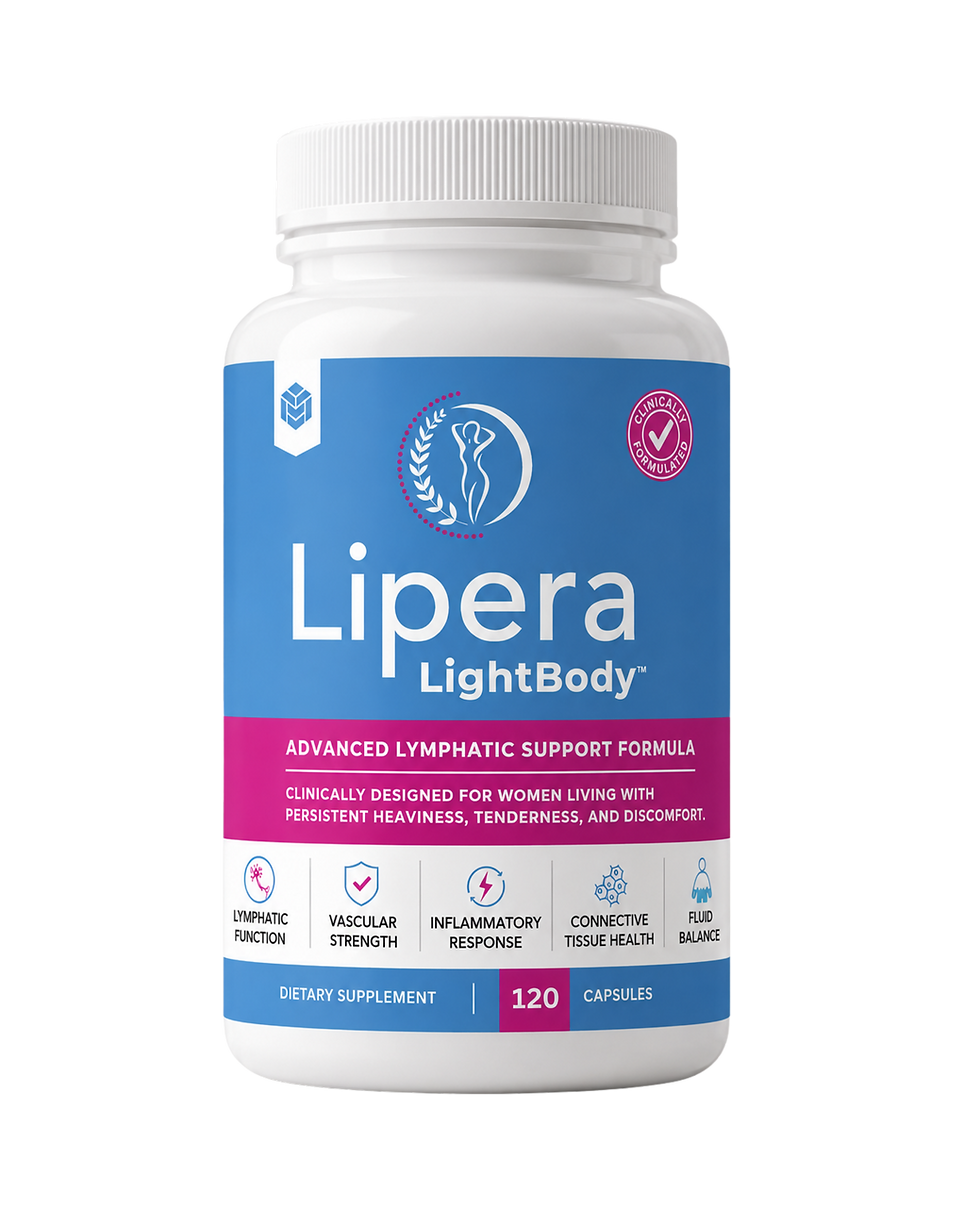
One of the biggest challenges women face is that symptoms often interfere with consistency.
It's hard to stay active when your legs feel heavy.
It's hard to exercise when tenderness makes movement uncomfortable.
It's hard to stay motivated when swelling fluctuates daily.
This is one reason many women incorporate Lipera into their routine.
You can learn more through the Lipera About page, but the goal behind Lipera is to help support common lipedema-related complaints such as heaviness, tenderness, fluid retention, circulation concerns, and overall comfort.
Reducing symptom burden may make it easier to stay consistent with the habits that matter most.
Consistency often matters more than intensity.
Strategy 4: Compression Therapy
Compression is not glamorous.
But it works.

Many women report noticeable improvements in:
Daily comfort
Heaviness
Swelling
Activity tolerance
Compression helps support fluid management throughout the day and may reduce symptom fluctuations that make progress feel unpredictable.
Women looking for how to breakdown lipedema fat sometimes overlook compression because it does not directly remove fat tissue.
That misses the point.
Managing symptoms effectively often creates a better environment for every other strategy to work.
Strategy 5: Cold Therapy
This is an area that deserves more attention.
Many women notice that heat worsens symptoms.
Cold often produces the opposite effect.
Cold exposure may help support:
Reduced swelling
Improved comfort
Lower tissue temperature
Recovery after activity
Unlike heat, which frequently aggravates heaviness and fluid retention, cold exposure may temporarily help calm symptom flare-ups.
This doesn't mean ice baths are required.
Even simple cooling strategies may provide benefits for some women.
The key is finding what your body responds to best.
Strategy 6: Build Muscle Through Strength Training
One of the biggest mistakes women make is relying exclusively on cardio.
Strength training is often far more important.

Muscle helps:
Support metabolism
Improve mobility
Increase circulation
Improve body composition
Enhance long-term function
Many women with lipedema become trapped in a cycle of endless walking and cardio while neglecting resistance training.
That approach frequently leaves results on the table.
Strength training won't eliminate lipedema fat.
But it can dramatically improve how the body looks, feels, and functions.
Why Fluid Matters More Than Most People Realize
Many women focus entirely on fat.
The reality is that fluid retention often contributes significantly to how symptoms feel.
When swelling increases, legs can feel:
Larger
Heavier
More painful
More restrictive
This is one reason treatment plans often combine nutritional strategies, compression, movement, and symptom support.
Research discussed in this clinical review of lipedema treatment approaches highlights the importance of comprehensive management strategies rather than relying on a single intervention.
Multiple systems are involved.
Multiple solutions are often required.
When Surgery Makes Sense
For some women, conservative management reaches a ceiling.
At that point, surgery may become a reasonable option.
Lipedema reduction surgery can physically remove affected tissue and improve mobility, comfort, and quality of life.
However, surgery should generally be viewed as part of a larger strategy rather than a replacement for healthy habits.

Women often achieve the best outcomes when surgery is combined with:
Nutrition
Compression
Strength training
Symptom management
Long-term maintenance
Even after surgery, these habits continue to matter.
The Truth Most Women Need To Hear
Many women spend years searching for the one thing that will finally solve everything.
The perfect supplement.
The perfect diet.
The perfect surgery.
The perfect workout.
Unfortunately, lipedema rarely works that way.
According to this review of current lipedema management, successful care generally involves multiple therapies working together rather than a single standalone intervention.
That may sound frustrating.
But it is actually empowering.
Because it means progress does not depend on finding one miracle solution.
It comes from stacking effective strategies together.
Final Thoughts
If you're wondering how to breakdown lipedema fat, the most important thing to understand is that there is rarely one answer.
The women who achieve the best results typically combine anti-inflammatory nutrition, symptom support, compression, movement, strength training, fluid management, and sometimes GLP-1 medications or surgery.
Each strategy addresses a different part of the problem.
Lipedema is complex.
That means the solution must be comprehensive too.
The good news is that meaningful progress is possible when you stop looking for a magic bullet and start building a complete plan that works with your body rather than against it.