
Thin with Lipedema: Why Lipedema in Skinny People Is Very Common
For years, many people assumed this condition only affected women who were overweight.
That misconception has caused countless women to question their own symptoms simply because the number on the scale does not match what they expected.

Throughout this article, I'll use the phrase "thin lipedema" simply as an easy way to describe women who have lipedema while maintaining a relatively lean body weight.
It is not an official medical diagnosis or a separate type of lipedema, but it helps explain a presentation that is actually far more common than many people realize.
Why So Many Women Stay Thin Despite Having Lipedema
One of the biggest misunderstandings surrounding lipedema is the belief that body weight determines whether someone has the disease. In reality, lipedema is a disorder involving abnormal fat distribution, connective tissue changes, and lymphatic dysfunction—not simply excess calories or obesity.
Many women with thin lipedema work incredibly hard to stay lean.
They exercise consistently, avoid overeating, skip meals when they are not hungry, limit sugary foods, and spend years intentionally maintaining a calorie deficit because they know what happens if they don't.

As explained in the recent clinical review, lipedema tissue behaves differently from ordinary body fat and often remains resistant to traditional weight-loss strategies.
For these women, staying skinny is not effortless. It is often the result of constant discipline.
Lipedema in Skinny People Is More Common Than Most Realize
Many women assume they cannot possibly have lipedema because they wear a small clothing size or have a relatively low BMI.
The reality is that lipedema in skinny people is seen far more often than most realize.
Some women develop noticeable disproportion between their upper and lower body while remaining thin everywhere else.
Others have lean arms, a slim waist, but legs that feel unusually heavy, tender, or difficult to change despite years of exercise.
Instead of asking whether someone looks overweight, physicians increasingly focus on the pattern of fat distribution, pain, tenderness, easy bruising, and swelling that accompanies the condition.
A published diagnostic case report highlights how lipedema may be overlooked when clinicians rely too heavily on body weight rather than characteristic symptoms.
Lifestyle Often Explains the Difference
Imagine two women who both have lipedema.
The first carefully monitors her eating habits.
She rarely overeats, naturally eats smaller portions, stays active, and avoids extended periods of weight gain because she knows even a few months of excess calories can dramatically change the appearance of her legs.

The second woman eats what would be considered a fairly average diet.
She is not necessarily overeating, but she spends more time in a calorie surplus than the first woman.
Without lipedema, both women might have relatively average body sizes.
With lipedema, however, the second woman may appear much larger than expected because the disease adds abnormal fat accumulation on top of normal weight gain.
Meanwhile, the first woman continues fighting every day simply to maintain a body weight that hides part of the condition.
Neither woman caused her disease.
The difference is often how aggressively they have managed their weight over many years.
Can Thin People Get Lipedema?
Absolutely.
The answer to can thin people get lipedema is yes, and many specialists would argue this misconception delays diagnosis for thousands of women.
Women with early-stage disease frequently appear healthy, athletic, or naturally slim.
Because friends, family members, and even healthcare providers sometimes associate lipedema only with obesity, symptoms may be dismissed for years.
Unfortunately, the underlying tissue changes continue regardless of someone's clothing size.
Many women report years of unexplained tenderness, heaviness, swelling after standing, easy bruising, or legs that simply never respond the same way as the rest of their body.
Weight Loss Does Not Remove Lipedema
One reason this misunderstanding continues is that weight loss absolutely can make someone look smaller.
Reducing overall body fat often decreases mechanical stress on joints, improves mobility, and may reduce general inflammation throughout the body.
However, losing weight is not the same thing as eliminating lipedema tissue.
This is becoming especially important with the growing popularity of GLP-1 medications.
Many women wonder whether these medications finally solve the underlying problem.
Current evidence suggests they can produce significant overall weight loss, allowing someone to become thinner, but they do not remove the abnormal fat tissue, connective tissue changes, or lymphatic dysfunction that define lipedema.
For a more detailed explanation, see Zepbound and lipedema, which discusses what GLP-1 medications may and may not accomplish.
Can You Be Thin and Have Lipedema?
The short answer is yes.
If someone asks, can you be thin and have lipedema, the answer is that body weight alone has never been sufficient to diagnose or rule out the disease.
Likewise, a thin person with lipedema may experience many of the same symptoms reported by women who weigh significantly more, including tenderness, heaviness, swelling, and disproportionate fat accumulation.
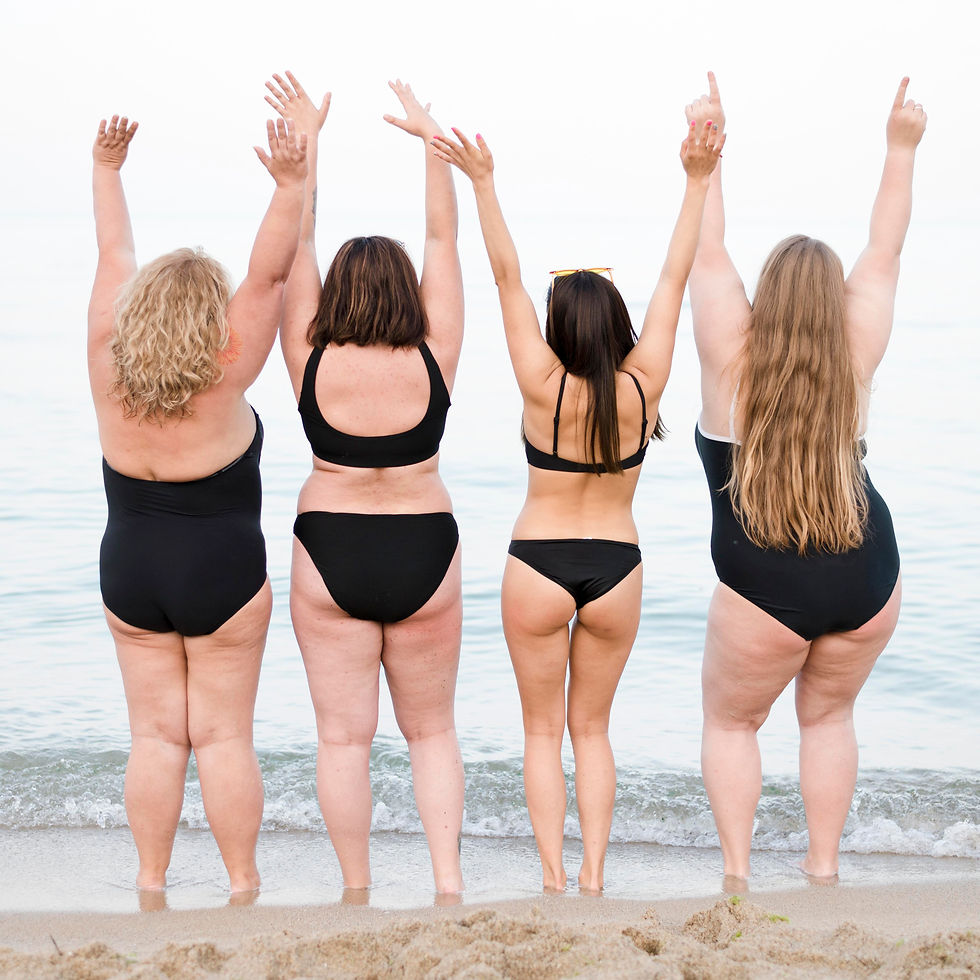
The visible appearance may differ, but the underlying disease process remains the same.
This is why many experts encourage looking beyond BMI and focusing instead on symptom patterns and clinical examination.
Why Thin Women May Notice Their Legs More
Ironically, women who stay lean often notice lipedema sooner.
When someone carries very little body fat elsewhere, disproportion becomes easier to see.
Small nodules beneath the skin, cellulite-like texture, cuffing around the ankles, or irregular fat distribution may become much more obvious than they would in someone carrying additional body fat.
This explains why lipedema in thin women can sometimes appear more visually dramatic despite the individual weighing considerably less overall.
Remaining lean does not make the disease disappear.
It simply changes how obvious the differences become.
Supporting Conservative Management
Although there is currently no cure for lipedema, many women build comprehensive conservative care routines that include healthy nutrition, regular movement, compression when appropriate, lymphatic support, and physician-guided treatment.
Some also incorporate supplements designed specifically for women living with lipedema symptoms as part of their daily routine.
Our guide covering the top swelling supplements reviews several ingredients commonly discussed for conservative symptom management.
Understanding the biology behind lipedema helps explain why treatment usually focuses on long-term management rather than simply losing weight.
The misconception that only overweight women develop this condition has prevented far too many women from recognizing what has been affecting them for years.
Recognizing the signs early and seeking evaluation from a knowledgeable healthcare professional can make a meaningful difference in building an effective long-term care plan.