
Is Lipedema a Connective Tissue Disorder? What the Research Actually Shows
For years, lipedema was described primarily as a disorder of abnormal fat.
That description isn't necessarily wrong.
It's just incomplete.
Researchers are increasingly discovering that the abnormalities seen in lipedema extend beyond fat cells themselves and involve the structural environment surrounding those cells—including connective tissue, the extracellular matrix, blood vessels, fluid balance, fibrosis, and potentially lymphatic function.
So, is lipedema a connective tissue disorder?
There is strong scientific support for viewing it that way.
In fact, the U.S. Standard of Care for lipedema specifically recommends regarding lipedema as a disease of loose connective tissue rather than simply a disease of adipocytes, or fat cells.
Understanding that distinction may completely change the way you think about what is happening underneath the skin.
1. First, What Exactly Is Connective Tissue?

Connective tissue is everywhere.
It provides structure, support, connection, and organization throughout the body.
Bone is connective tissue.
Cartilage is connective tissue.
Tendons and ligaments are connective tissue.
And here's the part that surprises many people:
Adipose tissue is also considered a form of loose connective tissue.
Fat isn't simply a collection of isolated fat cells sitting underneath your skin.
Adipose tissue contains adipocytes alongside blood vessels, immune cells, fibroblasts, nerves, extracellular fluid, collagen, elastin, and an intricate extracellular matrix.
Think of the extracellular matrix as the structural environment surrounding the cells.
It contains proteins and other molecules that help determine how tissue behaves mechanically and biologically.
And in lipedema, evidence suggests that this environment is altered.
2. Lipedema Isn't Just About Having Too Many Fat Cells
This is one of the biggest changes in how researchers are thinking about the disease.
The U.S. Standard of Care for lipedema states that lipedema should be regarded as a loose connective tissue disease rather than simply a disease of fat cells.
Why?
Because researchers have observed abnormalities extending throughout the tissue.
These include changes involving:
Extracellular matrix
Collagen and other structural fibers
Fibrosis
Interstitial fluid
Blood vessels
Lymphatic vessels
Immune cells
Tissue elasticity
This creates a much more complicated picture than:
“The body stores too much fat in the legs.”
The tissue itself appears biologically and structurally different.

That's why lipedema can feel different from ordinary body fat.
3. The Extracellular Matrix May Be a Major Piece of the Puzzle
Every fat cell exists inside a surrounding structural network.
That's the extracellular matrix, commonly abbreviated ECM.
The ECM contains structural proteins such as collagen and elastin as well as proteoglycans, glycosaminoglycans, fluid, and numerous signaling molecules.
In healthy tissue, this environment is constantly remodeled.
But research suggests that this remodeling may become abnormal in lipedema.
A scientific review examining lipedema morphology and pathophysiology describes altered extracellular matrix states as an important feature of the disease.
Researchers have reported changes involving tissue elasticity, interstitial fluid accumulation, collagen organization, and fibrosis.
That could help explain something women with lipedema frequently notice:
Their tissue doesn't simply look different.
It feels different.
4. Why Does Lipedema Tissue Become Nodular and Firm?
Early lipedema tissue can feel relatively soft.
But many women notice small structures underneath the skin that feel like:
Rice grains.
Peas.
Pebbles.
As the condition progresses, tissue can become increasingly nodular and fibrotic.
This isn't simply a cosmetic description.
Fibrosis refers to excessive or abnormal accumulation and remodeling of connective-tissue components such as collagen.
The U.S. Standard of Care describes fibrotic changes within lipedema's extracellular matrix and identifies palpable nodules as an important clinical feature.
More recent research continues to identify fibrosis and extracellular matrix remodeling as central characteristics of affected adipose tissue.
That helps explain why advanced lipedema can feel significantly firmer than ordinary subcutaneous fat.
You're not simply feeling larger fat cells.
You're feeling changes within the structure surrounding them too.
5. Connective Tissue Could Help Explain the Strange Texture of Lipedema
This is where everything begins fitting together.
Why can lipedema tissue feel unusually loose in some places but fibrotic and firm in others?
Why can large nodules develop?
Why can tissue begin hanging or forming lobules as the condition progresses?
Why do some women experience reduced tissue elasticity?
Connective-tissue remodeling offers at least part of a potential explanation.
Structural fibers influence how tissue holds its shape.
The extracellular matrix influences how cells and fluid are organized.
Fibrosis can make tissue firmer.
Reduced elasticity can allow tissue to stretch and hang differently.
None of these mechanisms should be viewed in isolation.
Lipedema appears increasingly like an interconnected tissue disorder rather than simply abnormal fat storage.
6. What Does Fluid Have to Do With Connective Tissue?
Quite a lot.
Fluid doesn't simply travel through large lymphatic vessels like water moving through plumbing.

Fluid also exists in the spaces between cells.
This is called interstitial fluid.
The extracellular matrix helps regulate that environment.
Certain molecules within it—including glycosaminoglycans and proteoglycans—can bind water and sodium.
Research cited in the U.S. Standard of Care found greater extracellular fluid in lipedema tissue compared with matched controls, along with increased sodium in skin and loose connective tissue.
This has led researchers to propose that abnormalities in the extracellular matrix may contribute to altered fluid handling within lipedema tissue.
That does not mean lipedema is simply fluid retention.
It isn't.
But fluid, connective tissue, blood vessels, and lymphatic function may interact with one another.
That's a much more useful model.
7. Blood Vessels Are Part of the Story Too
One of the most recognizable symptoms of lipedema is easy bruising.
Many women describe bruises appearing after minor bumps—or without remembering any injury at all.

That has led researchers to investigate the microvasculature inside affected tissue.
And abnormalities have been identified.
Recent research describes lipedema as a multifactorial disorder involving connective-tissue dysregulation alongside vascular dysfunction.
Studies have reported increased or altered small blood vessels, capillary fragility, abnormal angiogenesis, and changes in endothelial function.
That matters because blood vessels influence what enters the surrounding tissue.
When tiny vessels become unusually permeable or fragile, fluid and other substances can enter the interstitial environment.
The lymphatic system then has to remove that fluid.
So once again, we don't have isolated problems.
We have interacting systems:
Blood vessels → extracellular matrix → interstitial fluid → lymphatic vessels → connective tissue.
That interconnected biology is one reason reducing lipedema to “stubborn fat” misses so much.
8. Is Lipedema a Disease?
Yes.
Lipedema isn't simply a body type.
It isn't cellulite.
It isn't another word for obesity.
And it isn't a cosmetic problem created because someone failed to exercise enough.
Lipedema is a disease characterized by abnormal tissue distribution and associated biological and clinical changes.
Its exact underlying cause remains unresolved, and researchers continue debating aspects of its pathophysiology.
But uncertainty about the precise mechanism doesn't make the disease imaginary.
We see this distinction constantly in medicine.
A disease can be clinically recognizable long before researchers understand every molecular pathway responsible for creating it.
That's essentially where lipedema research remains today.
We know a great deal more than we did several decades ago.
But there are still enormous gaps.
9. What About Hypermobile Joints?
Here's another fascinating connection.

Joint hypermobility appears relatively frequently among women with lipedema.
The U.S. Standard of Care cites research in which approximately half of women with lipedema had hypermobile joints and discusses this finding in the context of connective-tissue abnormalities.
Women with lipedema have also been reported to demonstrate reduced skin elasticity and other structural differences.
That doesn't mean everyone with lipedema has a generalized connective-tissue disorder.
And it certainly doesn't mean every woman with hypermobile joints has lipedema.
But the overlap has attracted significant scientific interest.
Connective tissue influences joint stability.
It influences skin elasticity.
It influences blood vessels.
It influences adipose tissue structure.
It influences the extracellular environment.
When you start looking at lipedema through this lens, many apparently unrelated symptoms begin looking less unrelated.
10. Does That Mean Lipedema Is Like Ehlers-Danlos Syndrome?
Not exactly.
Ehlers-Danlos syndromes are a group of hereditary connective-tissue disorders involving abnormalities that affect collagen and related tissue structures.
Lipedema is a separate condition.
But researchers are interested in potential overlap between connective-tissue characteristics seen in lipedema and conditions involving hypermobility.
A recent review of vascular and connective-tissue changes in lipedema describes growing interest in the relationship between lipedema and connective-tissue disorders such as Ehlers-Danlos syndrome.
That doesn't mean lipedema is a type of EDS.
It means studying similarities and differences may teach researchers something about the structural biology involved in lipedema.
This is still an evolving area of research.
11. Why Doesn't Diet Simply Remove Lipedema Tissue?
This is where the connective-tissue perspective becomes especially interesting.
Ordinary adipose tissue can generally shrink when the body remains in an energy deficit.
People with lipedema can lose weight too.
They can lose ordinary body fat.
But affected areas may remain disproportionately large even after substantial weight loss.
Why?
We don't completely know.
But fibrosis and extracellular-matrix remodeling may be part of the explanation.
The U.S. Standard of Care notes that lipedema tissue is resistant to reduction through conventional diet, exercise, and even bariatric surgery, and discusses fibrosis of the loose connective tissue as a possible contributing factor.
This does not mean women with lipedema can't change their bodies.
They absolutely can.
Reducing excess non-lipedema fat while building skeletal muscle can dramatically improve overall body composition, strength, mobility, and health.
We've gone deeper into that strategy in our guide to building muscle with lipedema.
The goal isn't to give up because some tissue is resistant.
It's to improve everything you realistically can.
12. Why Muscle Becomes Even More Important
Once you understand that lipedema primarily involves adipose and loose connective tissue, another fact becomes extremely important:
Lipedema does not exist inside skeletal muscle.
Fat cannot literally turn into muscle.
But you can reduce excess non-lipedema fat while simultaneously building or preserving muscle.
That changes the composition of the body.
For example, imagine two legs of approximately the same circumference.
One contains significantly more adipose tissue and relatively little muscle.
The other contains substantially more skeletal muscle.
Those legs may have completely different strength, metabolic function, mobility, and physical capacity.
This is why resistance training deserves much more attention in lipedema management.
You're building healthy functional tissue.
You're improving the machinery underneath the affected connective and adipose tissue.
And you're giving your body something positive to adapt toward.
13. What Does This Mean for Treating Lipedema?
If lipedema were simply excess fat, the solution would be obvious:
Lose weight.
But if lipedema involves abnormal adipose tissue, connective tissue, extracellular-matrix remodeling, vascular changes, fibrosis, fluid dynamics, and potentially lymphatic dysfunction, management naturally becomes more comprehensive.
That's why modern conservative management may involve combinations of:
Nutrition.
Exercise.
Strength training.
Compression.
Manual therapy when appropriate.
Healthy body composition.
Lymphatic support.
Pain and symptom management.
No single component fixes everything.
Instead, each targets a different part of the problem.
Our complete lipedema treatment guide explains how these different strategies can fit together rather than relying on one supposed miracle treatment.
That's a much better approach to a complex tissue disorder.
14. Where Lipera Fits Into Connective-Tissue Support
This is also why Lipera was designed as a multi-ingredient formula rather than around one single pathway.

Lipera was physician-developed specifically for women with lipedema, with ingredients selected to support areas relevant to the condition, including circulation, fluid balance, lymphatic function, and tissue health.
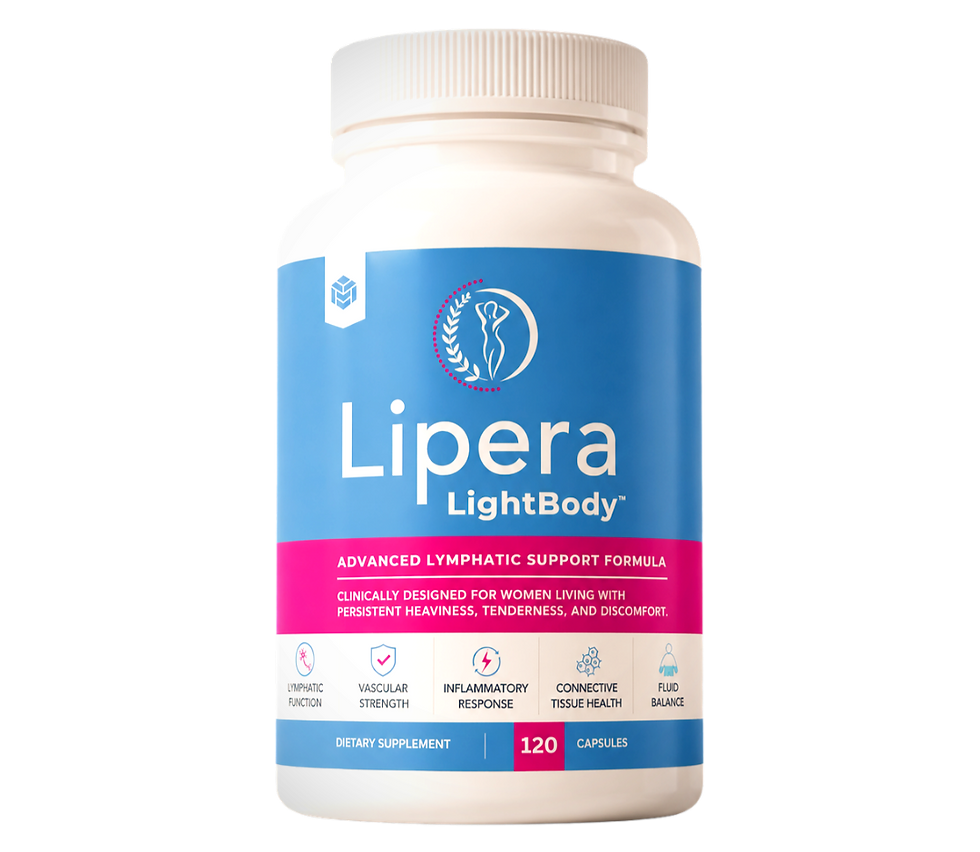
The formula includes ingredients such as diosmin, hesperidin, rutin, butcher's broom, bromelain, quercetin, curcumin, resveratrol, CoQ10, and other nutrients.
That doesn't mean Lipera has been clinically proven to repair abnormal connective tissue or cure lipedema.
It hasn't.
And it shouldn't replace exercise, nutrition, compression, or appropriate medical care.
The rationale is broader support.
If lipedema involves multiple interacting biological systems, it makes more sense to think about supporting the body comprehensively than searching for one ingredient that supposedly “melts lipedema fat.”
That's not how this disease works.
15. Why This Changes the Way We Think About Lipedema
Calling lipedema a connective-tissue disorder changes something important psychologically.
It moves the conversation away from:
“Why can't I lose this fat?”
And toward:
“What is biologically different about this tissue?”
Those are completely different questions.
The first assumes failure.
The second invites scientific investigation.
Why is the extracellular matrix different?
Why does fibrosis develop?
Why are blood vessels fragile?
Why does fluid accumulate differently?
Why is elasticity altered?
Why does tissue become nodular?
Why do some women develop hypermobility?
Why are lymphatic abnormalities seen in some patients?
Why does the condition overwhelmingly affect women?
Researchers are actively trying to answer those questions.
And the answers may eventually lead to entirely new treatment approaches.
Is Lipedema a Connective Tissue Disorder?
Based on current evidence, there is substantial support for viewing lipedema as a disorder involving loose connective tissue, rather than thinking of it exclusively as abnormal fat accumulation.
Adipose tissue itself is connective tissue, but lipedema appears to involve much more than enlarged fat cells.
Researchers have identified abnormalities involving the extracellular matrix, fibrosis, interstitial fluid, tissue elasticity, blood vessels, inflammatory processes, and potentially lymphatic function.
That doesn't mean scientists understand every part of the disease.
They don't.
But it does explain why lipedema behaves so differently from ordinary body fat.
It's why the tissue can become nodular.
Why it can become fibrotic.
Why it can bruise easily.
Why affected areas can remain disproportionately large after significant weight loss.
And why simply telling someone with lipedema to “eat less and exercise more” fails to capture what is actually happening underneath her skin.
Lipedema isn't just about how much fat you have.
It's about the biology and structure of the tissue itself.