
Does Lipedema Always Get Worse with Age? Only If You Let It
One of the most common and emotionally loaded questions women ask after diagnosis is this: does lipedema always get worse?
It’s a fair fear. Many are told—directly or indirectly—that progression is inevitable.
That lipedema will slowly worsen no matter what they do. That pain, swelling, fibrosis, and mobility issues are just a matter of time.
But that framing leaves out a critical truth: lipedema progression is not automatic.
It is heavily influenced by what’s happening inside the body—and what you do consistently after diagnosis.
The idea that decline is guaranteed robs women of agency. And it’s not supported by what we now understand about lipedema physiology.

Does Lipedema Get Worse with Age?
Lipedema can worsen with age, but age itself is not the primary driver.
Time alone doesn’t cause progression.
What actually matters is what tends to accumulate over time: inflammation, lymphatic stagnation, hormonal disruption, repeated stress, and untreated symptoms.
Clinical organizations describe lipedema progression as episodic rather than linear, often accelerating during periods of hormonal change or physiological stress, as outlined in a progression overview.
This explains why some women remain relatively stable for decades, while others experience sudden worsening after pregnancy, menopause, surgery, injury, or prolonged emotional stress.
Age isn’t the enemy. Unmanaged triggers are.
Why Lipedema Progresses in the First Place

To understand whether lipedema gets worse, you have to understand why it progresses at all.
Lipedema involves:
Impaired lymphatic drainage
Fragile capillaries that leak fluid
Chronic low-grade inflammation
Disproportionate fat cell growth
Eventual tissue fibrosis in later stages
When fluid is not cleared efficiently, inflammatory signaling increases.
Over time, this environment encourages fat cells to expand, connective tissue to stiffen, and pain sensitivity to rise.
If left unchecked, the condition becomes harder to manage—not because lipedema is aggressive by nature, but because the internal environment worsens.
Research increasingly supports the idea that inflammation and lymphatic dysfunction play a central role in symptom severity and progression, according to recent clinical findings.
This is important because it means progression is modifiable.
Does Lipedema Get Worse No Matter What?
No.
This is the most damaging myth surrounding lipedema.
Women who actively support lymphatic flow, reduce inflammation, and avoid long periods of unchecked stress often experience slower progression—and in many cases, meaningful symptom improvement.
Progression is not a countdown clock. It’s a response.
And that response can be influenced.
The 3 Most Important Things to Slow Progression (and Possibly Improve Symptoms)
1. Supplements: the lowest-effort, highest-impact foundation
If there is one place to start, this is it.
Supplements are the lowest-friction intervention available.
Unlike diet or exercise, they don’t require motivation, willpower, scheduling, or constant decision-making.
You don’t have to fight cravings, carve out time, or push through pain.
You simply take them consistently.
Targeted supplementation can support:
Lymphatic contractility
Microcirculation
Capillary integrity
Inflammatory signaling
Fluid movement
This matters because lipedema is not just a fat disorder—it’s a fluid and inflammation disorder.
When those systems are supported, pain, heaviness, swelling, and flare frequency often decrease.
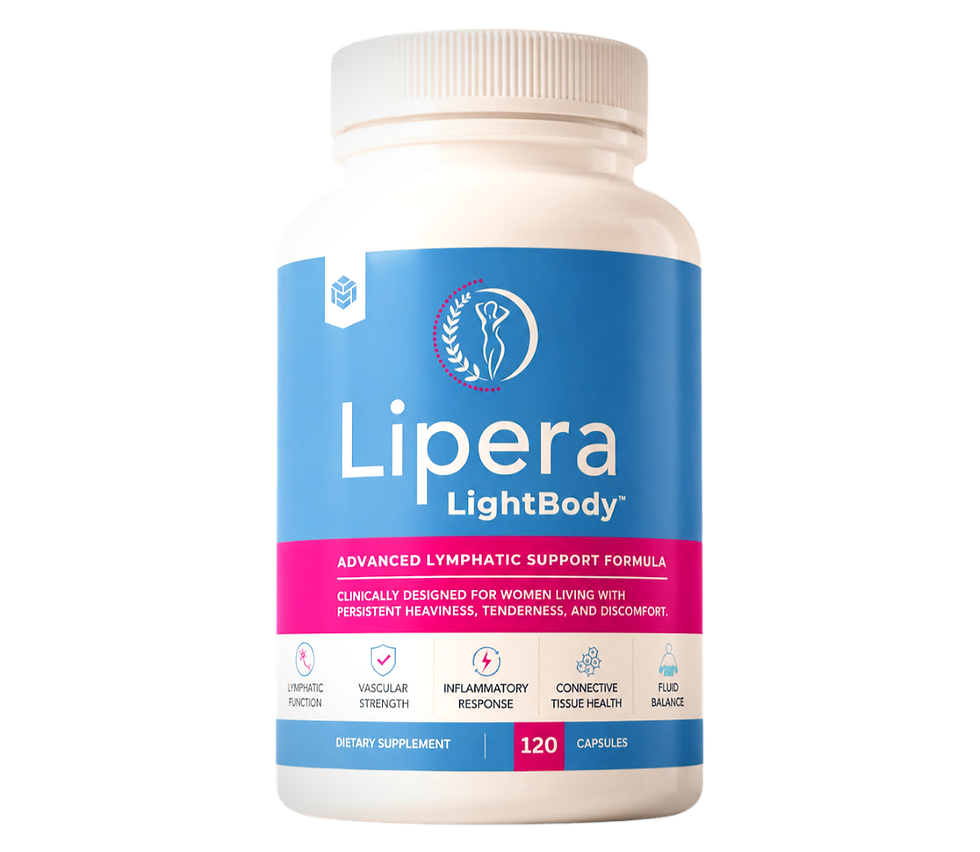
That’s why many women choose a comprehensive, condition-specific option like Lipera as a
foundation.
It addresses multiple mechanisms at once, which is crucial for a condition as multifactorial as lipedema.
For many, this step alone reduces symptoms enough that other lifestyle changes become easier to sustain.
2. Diet: powerful, but harder to maintain
Diet absolutely plays a role in lipedema management—especially when it comes to inflammation, insulin signaling, and fluid retention.
However, diet also comes with friction.
Temptations, cravings, social pressure, emotional eating, and fatigue all make consistency difficult.
This is why diet often fails when attempted alone, especially in women already dealing with pain and swelling.
Diet works best when inflammation is already partially controlled.
Once pain and heaviness decrease, dietary changes feel less punishing and more doable.
A structured approach can help reduce trial-and-error, which is why many women benefit from a practical nutrition plan that focuses on sustainability rather than perfection.
The goal isn’t restriction. It’s reducing inflammatory load.
3. Movement: consistency beats intensity
Exercise is often misunderstood in lipedema.
High-intensity, high-impact workouts can actually worsen symptoms for some women by increasing inflammation and triggering flares.
What matters most is regular, gentle movement that supports lymphatic flow without overloading the system.
This includes:
Walking
Swimming
Rebounding
Light resistance training
Mobility work
The lymphatic system relies on muscle contraction to move fluid. When movement is absent, stagnation increases.
Over time, this contributes to swelling, discomfort, and reduced mobility.
Maintaining movement is especially important as lipedema advances through stages, where tissue changes can become more pronounced, as explained in a clinical staging breakdown.
The goal is not to burn calories—it’s to keep fluid moving.
The Hidden Accelerator: Stress

Stress is one of the most under-discussed contributors to lipedema flares and progression.
Chronic stress elevates cortisol, disrupts lymphatic flow, increases inflammation, and impairs tissue repair.
Women often report severe symptom worsening after traumatic events, prolonged emotional strain, or long periods of burnout—and those flares can last months.
This isn’t psychological weakness.
It’s physiology.
Nervous system overload directly affects lymphatic function.
When stress remains high for too long, the body shifts into survival mode, and healing takes a back seat.
Managing stress isn’t optional. It’s part of treatment.
So… Does Lipedema Get Worse Over Time?
It can—but it doesn’t have to.
Lipedema tends to worsen fastest when it’s ignored, minimized, or treated as something uncontrollable.
It slows when inflammation is reduced, lymphatic flow is supported, and stress is addressed proactively.
Women who take action early often preserve function, reduce pain, and avoid rapid progression.
Some even experience partial symptom reversal—not because lipedema disappears, but because the internal environment improves.
If you want to explore additional non-surgical strategies beyond supplements, non-invasive options can help build a realistic, long-term plan.
Last Words on Everything Discussed
Lipedema does not worsen simply because time passes.It worsens when the systems it depends on—lymphatic flow, inflammation control, nervous system regulation—are neglected.
The most empowering truth is this: you are not waiting for decline.You are influencing direction.
And the easiest place to start is the thing that requires the least effort, yet creates the biggest ripple effect.
Consistency beats intensity.
Support beats suppression.And hope, when grounded in physiology, is justified.