
How to Properly Take Mucinex for Lipedema: What Women Need to Understand First
Updated: Jul 6
Many women with lipedema reach a point where they wonder whether common over-the-counter products might help the heaviness, fluid retention, or pressure their legs feel each day.
One of the most talked-about options is Mucinex — a medication traditionally used for thinning mucus during colds.
It’s not designed for lipedema, but because it affects the body’s fluid viscosity, some people explore whether it might offer any benefit.

Before thinking about Mucinex for lipedema or adding anything new to your daily routine, it helps to understand what Mucinex actually does, what lipedema tissue really needs, and why a supportive lymphatic supplement is often a far more aligned option than relying on a decongestant alone.
This guide breaks everything down clearly — from what Mucinex does biologically, to why lipedema fat behaves so differently, to how safe, supportive strategies fit into the big picture of managing swelling, inflammation, and tissue sensitivity.
How Does Mucinex Help Lipedema?
Mucinex contains an ingredient called guaifenesin, which is designed to thin mucus in the respiratory system.
It does not target lymphatic fluid, does not act on fat tissue, and does not influence the biology of lipedema. Some people assume it might help because thickened mucus and stagnant fluid sound similar, but the mechanisms involved are completely different.
To understand why lipedema tissue needs a different type of support, it helps to look at how fat cells behave under stress or inflammation.
Research from UCSF describes how certain metabolic triggers change how fat cells store and release fluid, as shown in fat-cell behavior research.
These changes are deeply connected to inflammation, tissue stiffness, and lymphatic congestion — the exact issues women with lipedema struggle with.
This is why relying on something like Mucinex for lipedema often falls flat.
The product simply isn’t interacting with the tissue that’s causing the heaviness.
But can it still help a little bit? Sure it can.
That's why most people still try it.
It can be a good addition to what you're currently using, but you can't be on it forever.
That's why it's only suggested to take for lipedema flare ups meaning unusual pain or swelling.
Why a Lipedema Supplement Fits the Biology Better Than Mucinex
This is the key distinction women need to understand:
Mucinex works on mucus in the respiratory system.
Lipedema symptoms come from tissue inflammation, fat-cell signaling, lymphatic congestion, and fluid overload.
That’s why using Mucinex for lipedema usually produces disappointment.
It’s not hitting the right system.
A better-aligned strategy is combining gentle decongestion (through movement, hydration, and light compression) with a supplement built specifically for lymphatic flow, inflammatory regulation, and tissue comfort.
Lipera’s ingredient design fits directly into this category, offering daily support for fluid transport, micro-circulation, and swelling, which makes it far more relevant to lipedema symptoms than Mucinex ever could.
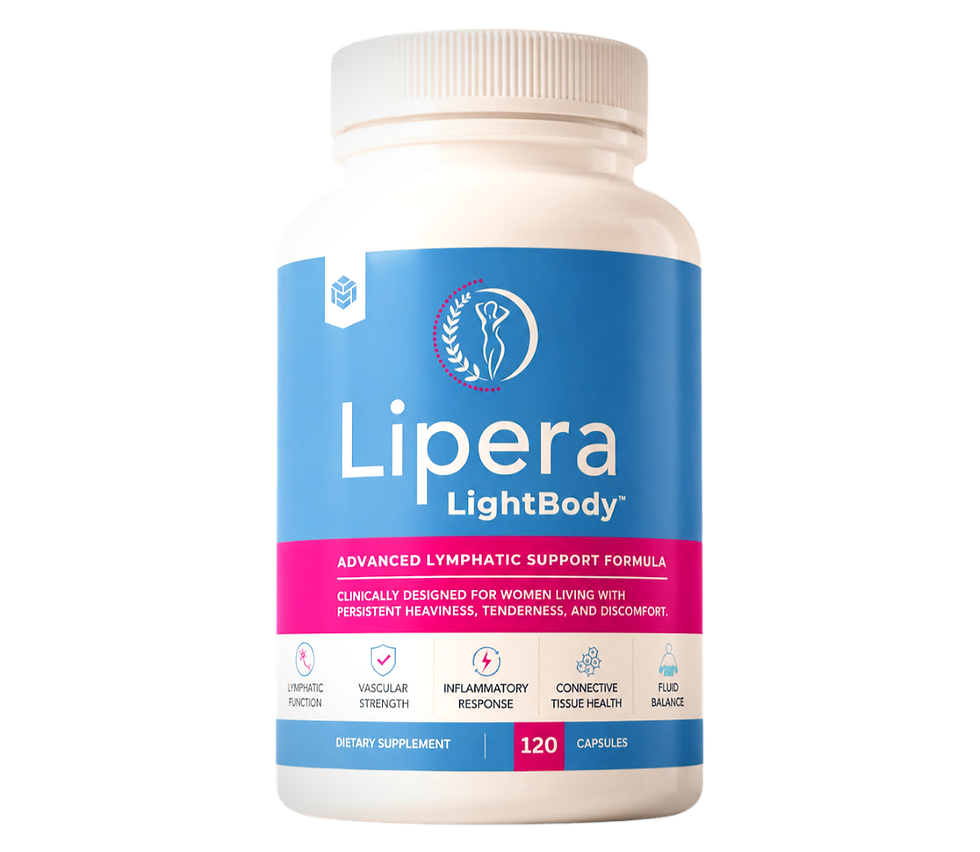
For women who want to explore how supportive ingredients actually work together, they can visit the How It Works page for a clear breakdown. Or just look at the photo below.
Dr. Volshteyn has recommended it to lipedema patients for the past two years, with great patient-reported feedback.
Here's a visual representation of how Lipera works for lipedema:

Why People Explore Mucinex Anyway — and Why It Rarely Helps
Mucinex gained attention in various online groups because guaifenesin can affect the thickness of certain bodily fluids.
But lymphatic fluid is not mucus. It is a completely different substance transported through lymphatic vessels — and those vessels rely on muscle movement, pressure gradients, and internal contractility to move fluid.
Women exploring Mucinex for lipedema often have the right instinct — wanting to reduce fluid buildup — but the wrong target.
True relief usually requires supporting lymphatic flow, easing inflammation, and helping tissues drain more comfortably.
These are the same physiological themes discussed in this post on natural remedies, which explains how gentle movement, compression, hydration, and supportive ingredients create a more steady baseline.
Because lipedema involves swollen, inflamed, sensitive tissue — not mucus — Mucinex rarely makes a difference for symptoms.
How Lipedema Tissue Differs Fundamentally From Normal Fat
Lipedema fat is not simply “large fat.” It’s structurally different, containing fibrotic bands, increased fluid pockets, and altered inflammation patterns.
It tends to resist calorie-based weight loss, accumulate fluid throughout the day, and feel painful or heavy even with little pressure.
Understanding this shift helps explain why many over-the-counter products don’t match what the tissue needs.
Lipedema tissue doesn’t respond well to intense fat-burning strategies, harsh diet plans, or aggressive diuretics.
Instead, it responds to consistent, moderate support: improved lymphatic flow, daily movement, anti-inflammatory routines, and targeted supplements that help the tissues stay as healthy and mobile as possible.
What Science Says About Fluid, Signaling, and the Lipedema Sensation of Heaviness
One of the most important reasons women with lipedema feel so much heaviness is the way cells communicate under stress.
Certain proteins and pathways control how fat tissue stores water, handles inflammation, and shifts its internal pressure.

Research from Cell explores these patterns in depth, demonstrating how adipocytes alter behavior in chronic inflammatory environments — patterns that overlap heavily with lipedema physiology.
These insights appear in adipose cellular mechanisms and help explain why tissue stiffness, fluid retention, and soreness often cluster together.
When cells send these altered signals, lymphatic vessels must work harder. If vessels are sluggish, compressed, or overwhelmed, fluid accumulates — producing the hallmark lipedema heaviness Mucinex cannot address.
Why “Trying Something New” Doesn’t Mean Guessing
It’s normal to want fast relief. Lipedema is painful, heavy, and emotionally exhausting.
But “trying something” shouldn’t mean guessing blindly.
When you look at the tissue biology, it becomes clear which strategies make sense and which don’t.
Anything that doesn’t interact with lymphatic function, inflammatory signaling, or fat-cell structure is unlikely to move the needle for lipedema.
Women don’t need more trial and error — they need clarity and a plan that respects their physiology.
How Lipedema Takes Over Bruising, Pressure, and Fluid — And Why Support Matters Daily
Many women notice bruising, micro-vessel fragility, or pressure sensitivity.
These symptoms arise from fragile capillaries and lymphatic overload — not from congestion that Mucinex is designed to fix.
This blog on bruising breaks this down well, showing how circulation, lymph flow, and inflammation interact.
This is the kind of support Mucinex cannot offer.
What Research Shows About Fat Storage, Fluid Pressure, and Tissue Load
One final piece of the biological puzzle comes from broader studies on how fat cells manage pressure and storage.

New Atlas explored the proteins that decide how fat cells store or release lipids — processes that play a direct role in how swollen or heavy tissue can feel.
This concept is described in fat-storage signaling, and it helps explain why lipedema tissue often feels different from normal fat.
When storage patterns shift, internal pressure changes — and the lymphatic system must keep up.
If lymph flow is compromised, heaviness builds quickly throughout the day.
Final Thoughts — So Should Women Use Mucinex for Lipedema?
Here’s the straightforward answer:
Mucinex is not dangerous for most people, but it’s also not a treatment for lipedema — and it rarely reduces swelling or heaviness caused by lymphatic overload.
If you’re considering mucinex for lipedema, understand that its effects won’t target the tissue that needs the most help.
The strategies that actually matter for lipedema are:
lymphatic flow
inflammation reduction
microcirculation
tissue stability
fluid regulation
daily supportive ingredients
This is why the safest, most effective, most biology-aligned tool isn’t a mucus thinner — it’s a supplement built for lymphatic support.
Lipera was designed exactly for that purpose. It aligns with the physiology of lipedema in a way an OTC decongestant never can.
If you’re looking for comfort, clarity, and a daily plan that supports your body instead of fighting it, Lipera is the direction that makes sense.